
Tribal Superfund Working Group

The Tribal Superfund Working Group (TSFWG) is a network of Tribal professional, other experts, and government employees that are engaged in work with Superfund sites, Federal Facilities and other sites of special concern.

The Tribal Superfund Working Group (TSFWG) is a network of Tribal professionals, other experts, and government employees that are engaged in work with Superfund sites, Federal Facilities and other sites of special concern. These individuals work on protecting Tribal lands, water, and community health and have become part of this group either by self-subscribing, because of their past work on Superfund issues, or because Superfund is their primary area of work or interest. Sign up for the TSFWG listserv here, or email Todd Barnell (Todd.Barnell@nau.edu) or Julie Meikowski (Julie.Meikowski@nau.edu) and request to be added.

TSFWG Meeting Notes, Presentations, and Recordings
PFAS Analytical Tool thumbnail

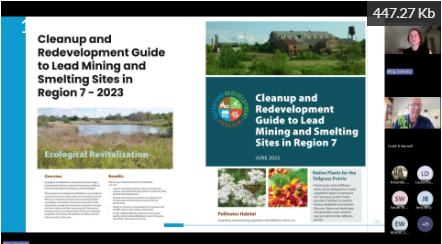
July 2026: TSFWG: Superfund Redevelopment: Site Specific and Regional Projects

Summer King, EPA’s Superfund Tribal Coordinator, discusses the available tools and resources to help Tribal governments, community members, property owners, local and state government leaders potential developers, and other interested parties assess the viability of Superfund properties for redevelopment and integrate future redevelopment into the remedial process. The session highlights site-specific projects with Tribal involvement, and how Tribes can become involved in future projects. 

Summer shared this site as a reference for related projects:
Reuse at Superfund Sites with Tribal Involvement | US EPA

PFAS Analytical Tool thumbnail

February 2026: TSFWG: Superfund/Brownfield Redevelopment and AI Data Centers

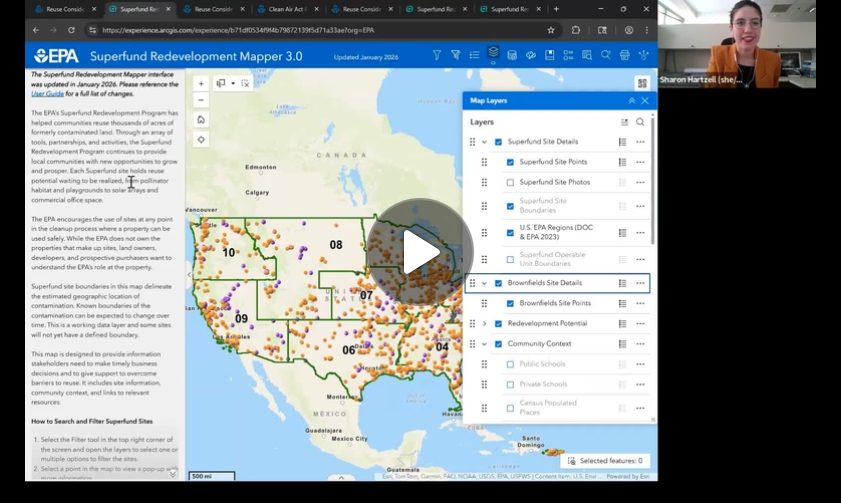
For our first quarterly get-together in 2026, Sharon Hartzell, EPA’s Superfund Redevelopment Program (SRP) Manager, discussed SRP’s collaborative effort with the Brownfields program to develop resources for the potential reuse of Superfund and Brownfields sites as artificial intelligence (AI) data centers. Sharon discussed siting criteria, site reuse resources, and other considerations pertaining to data center reuse.

The Superfund Redevelopment Program and Brownfields and Land Revitalization Program have assembled information, tools and resources to help community members; property owners; local, state or Tribal government leaders; potential developers; and other interested parties assess the viability of Superfund site properties and brownfield sites for redevelopment as possible locations for Artificial Intelligence (AI) data centers or other facilities related to AI infrastructure or development. The information, including a mapping tool to screen for sites that may be good candidates for AI infrastructure, can be found on two web pages:
PFAS Analytical Tool thumbnail

December 2025: TSFWG: Bunker Hill Restoration & Superfund Assistance

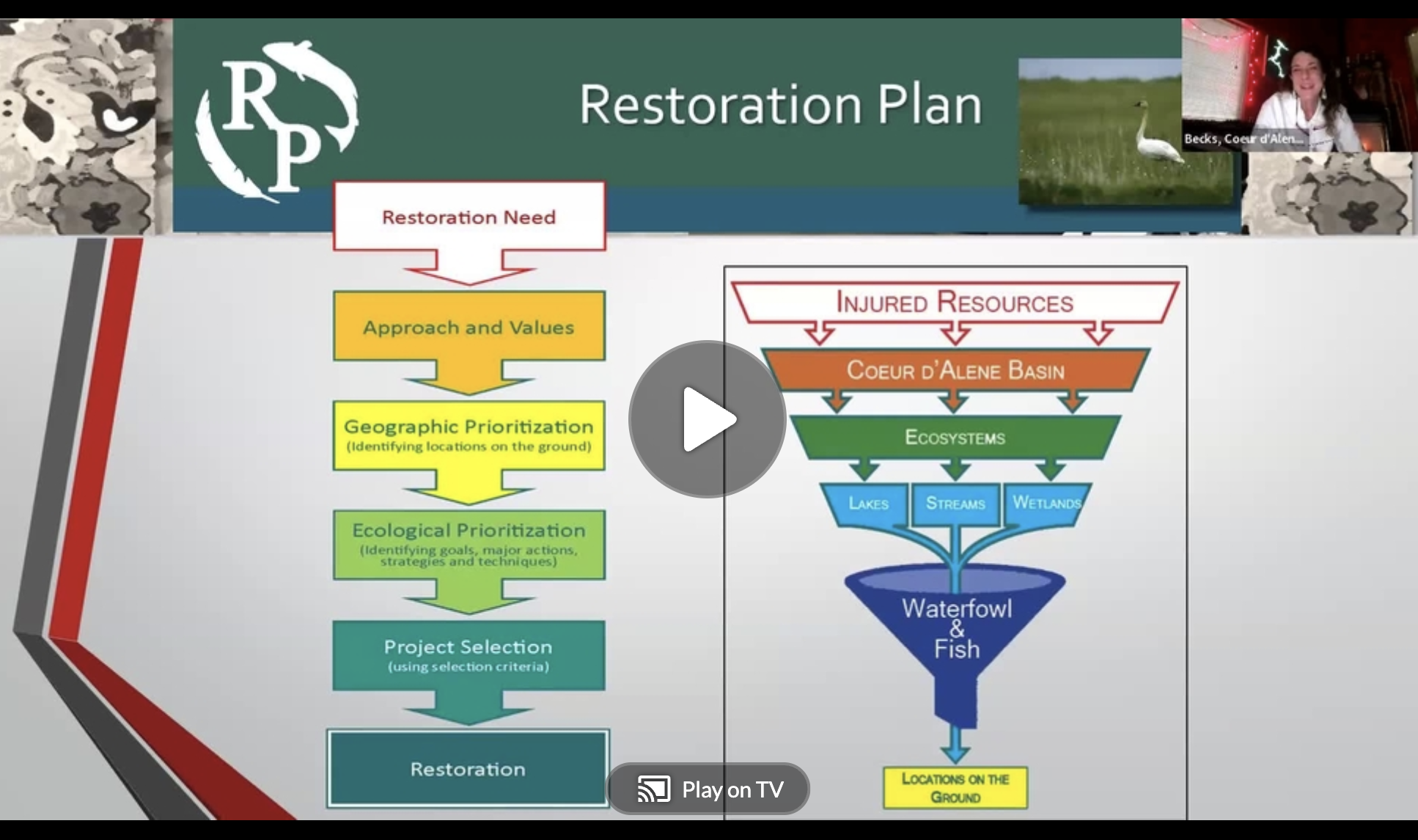
Rebecca Stevens at the Coeur d’Alene Tribe kicked off this session with some exciting updates on restoration work happening at the Bunker Hill Superfund site. Todd Barnell then followed up with a discussion about some potential research topics the Waste and Response team will tackle in the next few years to help Tribal staff working on contaminated sites. In the past, the team has developed events and resources on a variety of research topics ranging from finding and working effectively with contractors to dealing with the loss of institutional knowledge. All of these resources can be found on this website.
PFAS Analytical Tool thumbnail

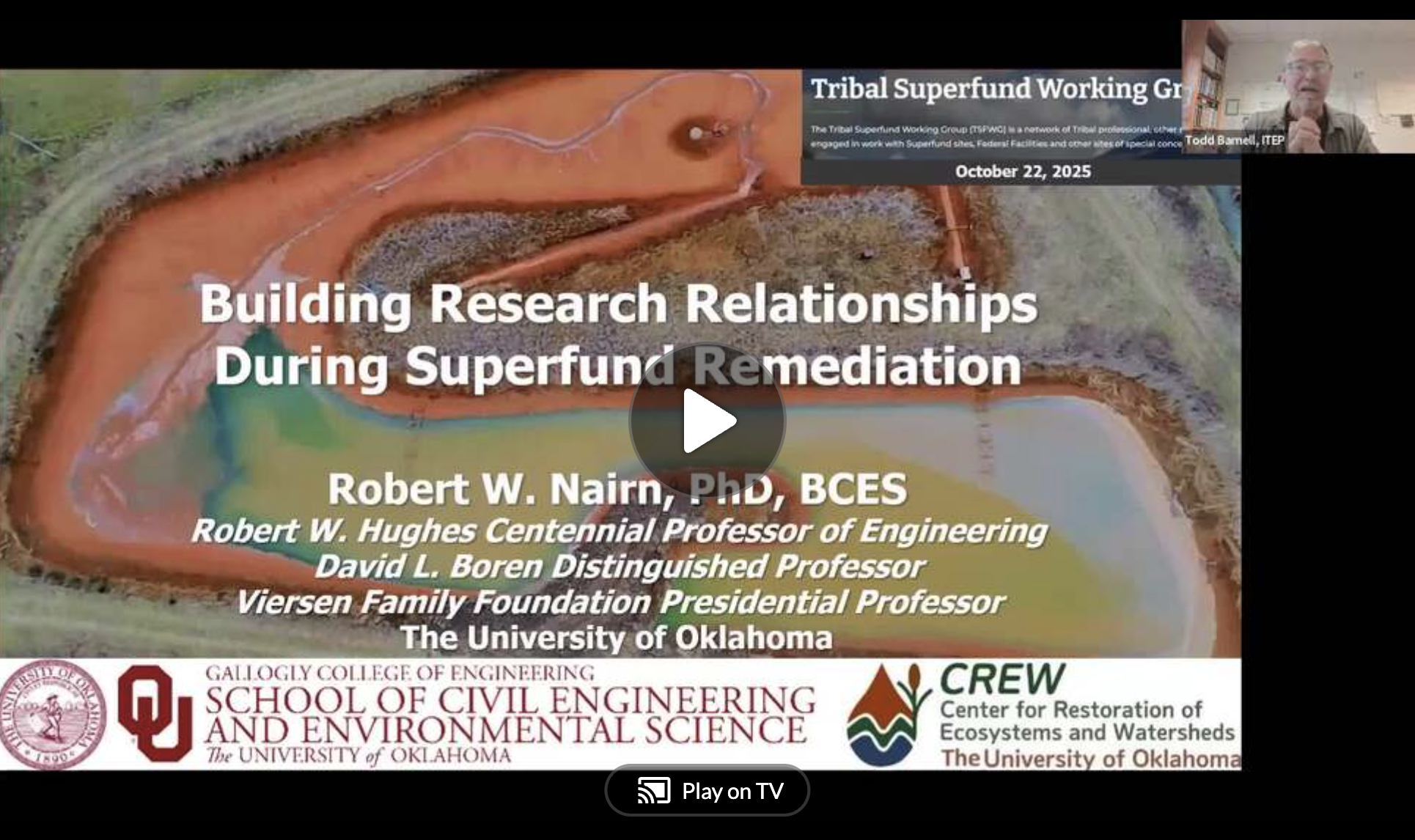
October 2025: Building Research Relationships During Superfund Remediation

Dr. Robert Nairn from the University of Oklahoma shared several projects he and his team have conducted, in cooperation with Tribes, that showed damage from previous mining is not irreversible, and how Natural Infrastructure can restore ecosystems. He also shared stories from their work addressing PFAS and PFOS. This is an inspiring discussion that also shows how reciprocal relationships between Tribes and researchers gets results.
PFAS Analytical Tool thumbnail

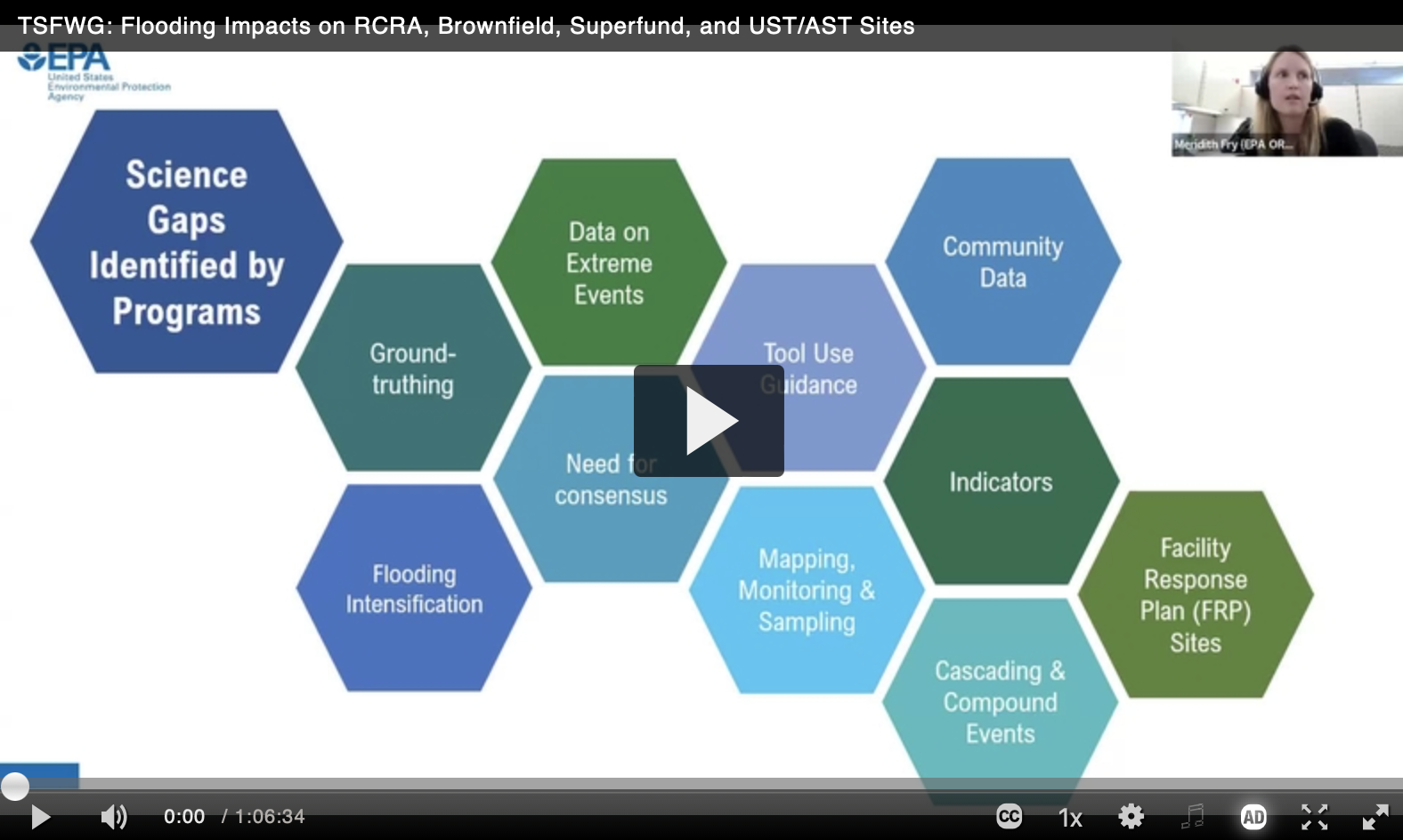
July 2025: Flooding Impacts on RCRA, Brownfield, Superfund, and UST/AST Sites

Meredith Fry and Lauren Oliver from EPA’s Office of Research and Development provided an overview to their recent Interim Report on the impacts of flooding at Superfund sites, Brownfields, RCRA sites, and petroleum storage tanks. They showed how to access and download nationwide data for heavy precipitation and median height above the nearest drainage which you can use to prepare your own sites.
PFAS Analytical Tool thumbnail

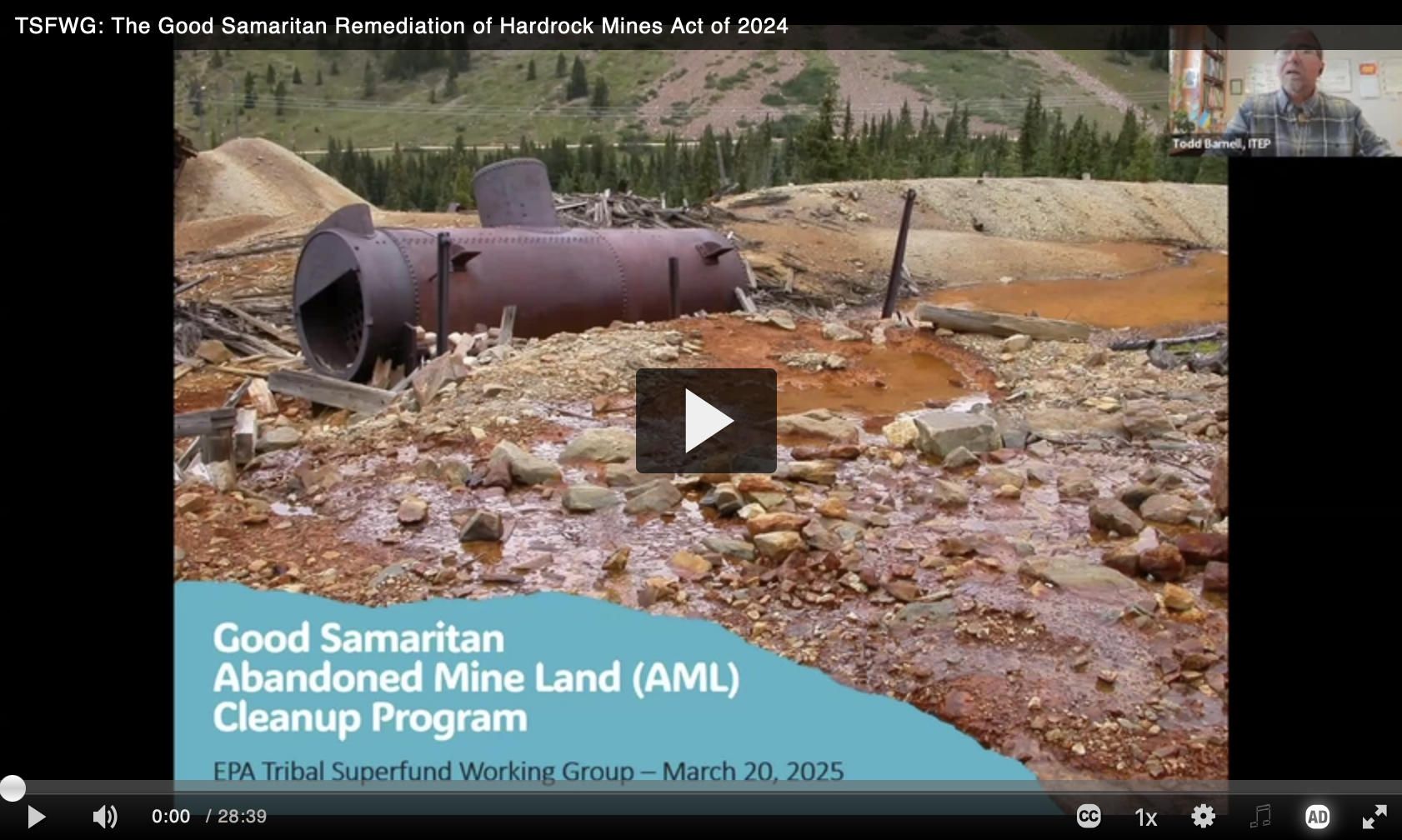
March 2025: The Good Samaritan Remediation of Hardrock Mines Act of 2024

David Hockney, with the US EPA Office of Deserts, Mountains, and Plains, provided an introduction to the Good Samaritan Remediation of Hardrock Mines Act of 2024 which was passed on December 17, 2024. Under this legislation, EPA is tasked with establishing a 7-year pilot program, where EPA may issue up to 15 permits to allow outside parties (Good Samaritans) to remediate mine residue at abandoned hardrock mine sites to protect human health and the environment without being subject to enforcement or liability.

OMDP is currently in the information-gathering stage of developing a guidance document for the pilot project. They have invited tribes to weigh in during this stage. They will also invite tribes to comment on the guidance document once they have put it out for public comments sometime in the next six months or so. The OMDP team posed seven questions to participants.


PFAS Analytical Tool thumbnail

December 2024: EPCRA Discussion

This training provided an overview of the Emergency Planning and Community Right-to-Know Act (EPCRA), which is also known as Title III of the Superfund Amendments and Reauthorizations Act (SARA Title III). The presentation focused on how EPCRA may be useful for remediation programs and offered an introduction to how Tribal communities can organize to work within the emergency planning and response framework to enhance chemical safety.

The training included an overview provided by the EPA’s Jennifer Barre. Insights on the challenges and successes of Tribal implementation of EPCRA were offered by Ruby Dawn Manning of the Shosone-Paiute Tribe. The target audience for this training is the Tribal Superfund community, but it is open to everyone.


Click here to access TSFWG Meeting Notes, Presentations, and Recordings from prior years

November 2024: EPA’s Updated Guidance for Lead in Soil

July 2024: Impacts & Costs of Flooding at Contaminated Sites

June 2024: Critical Minerals and Risk Communication with Tribes

January 2024: Climate Vulnerability Assessments at Sites on the National Priorities List

October 2023: PFAS Analytical Tool

June 2023: The Navajo Nation AUM Portal and Tribal Data

March 2023: Critical Minerals Presentation and Discussion

December 2022: EPA’s Federal Facilities Restoration and Reuse Office (FFRRO) and Hanford BC Case Study

July 2022: The Bradford Island and Henryetta Iron & Metal NPL Sites

May 2022: All Hazards Planning Guidelines

March 2022: Tribal Community Involvement at Superfund Sites

January 2022: PFAS Strategic Roadmap

September 2021: Climate Resiliency & Superfund Sites with Carlos Pachon

June 2021: Environmental Justice Conversation with Carlton Waterhouse

May 2021: TSFWG Virtual Panel: Finding and Managing Consultants

April 2021: Tribal Superfund Working Group Annual Meeting: Saint Regis Mohawk Tribe, (ten recordings and PDF presentations available with each recording)

March 2021: EPA Office of Research and Development (ORD) Technical Support and Regional Collaboration Featuring Superfund and Technology Liaisons (STLs)

February 2021 Evaluating Tribal Dietary, Lifestyle, and Ceremonial Exposures for use in EPA Superfund Risk Assessments PDF Presentation

December 2020: EPA Office of Mountains, Deserts, and Plains Director Discussion with TSFWG (closed session – no recording)

April 2020: Native Food Pathways and Contaminated Sites – A Discussion Between EPA and Tribal Professionals

March 2020: Protecting the Sacred in an Environmental Cleanup – the Fort Mojave Indian Tribe and the Topock Remediation Project, Topock Remediation Project Overview

November 2019: Stresses and Successes: A Difficult Responsibility for Tribes Restoring Contaminated Lands and Water

February 2019: Radionuclide Contaminant Transport at the Pueblo de San Ildefanso

November 2018: Phytoremediation Using Bacterial Endophyte Enhanced Poplar Trees

March 2018: Assessing and Preventing Exposures to EDCs in Alaska Native Communities on St. Lawrence Island

November 2017: Increasing Community Engagement on Contaminated Lands

February 2017: Superfund Cooperative Agreements – A Tribal Perspective

December 2016: Superfund Cooperative Agreements – A Federal Perspective

February 2016: Review of Coeur d’Alene Tribe’s Work on Bunker Hill Superfund Site (audio recording)

November 2015: TSFWG Meeting NotesPresentation by Dr. Barbara Harper – From Time Immemorial

August 2015: TSFWG Meeting Notes

February 2015: TSFWG Meeting Notes

November 2014: TSFWG Meeting Notes

July 2014: TSFWG Meeting Notes

March 2014: TSFWG Meeting Notes

Several Tribal Superfund professionals that are heavily involved in TSFWG activities also serve on the TSFWG Advisory Council (AC), acting as a resource and serving as a bridge between the TSFWG and the Tribal Waste and Response Steering Committee, and ITEP.

Current members of the TSFWG AC include:

Dino Chavarria

Director of Environmental Affairs, Santa Clara Pueblo

Dino Chavarria is the director for the Santa Clara Pueblo Office of Environmental Affairs. He oversees diverse programs dedicated to the protection of Pueblo resources such a Water Quality, Solid Waste, Superfund and Non-Point Source Pollution. The Pueblo is impacted by the North Railroad Avenue Plume Superfund site, which is comprised of multiple shallow and deep groundwater plumes of chlorinated solvents from a dry cleaner. The site was turned over to the State of New Mexico in 2019 after 10 years of remediation efforts by EPA Region 6. The site is within the exterior boundaries of the Pueblo. Monitoring wells and a treatment system were placed on Pueblo lands to assist in the clean-up of the site.

Kristen Hanson

Environmental Specialist, Lac du Flambeau Band of Lake Superior Indians

Kristen Hanson serves as the Environmental Response Program Coordinator and Environmental Specialist for the Lac du Flambeau Band of Lake Superior Chippewa Indians located in northern Wisconsin.  Her work focuses on assessment and cleanup of contaminated sites.  Kristen holds a Bachelor of Science degree in Geology from the University of Wisconsin, Eau Claire. 

Alex James

Environmental Program Manager, Yakutat Tlingit Tribe

Alex James is the environmental program manager for the Yakutat Tlingit Tribe. He lives in Yakutat, Alaska and works, fishes, and hunts throughout the usual and accustomed areas of the Tribe all around Yakutat. Alex manages planning and on -the-ground removal actions and cleanup work performed by trained and qualified Tribal members. This work is supported by the U.S. Department of Defense (DoD) Native American Lands Environmental Mitigation Program (NALEMP) and EPA Tribal Response Program. Alex brings several years of experience in construction management and conducting work in the forests of Southeast Alaska. Alex has accomplished a series of successful removal actions and site investigations that have contributed to the cleanup of Tribal lands and protection of Tribal resources since 2008. 

Summer King

Environmental Scientist, Quapaw Tribe

Summer King is the Environmental Scientist for the Quapaw Nation’s Environmental Department. She has a Master’s Degree in Industrial Management, and a Bachelor’s Degree in Environmental Management. She primarily works on the Tar Creek Superfund Site in northeast Oklahoma, in partnership with the EPA, State of Oklahoma, and the Quapaw Nation. Summer is charged with conducting sampling activities on active superfund remediation sites, and is involved in the remediation process from planning to final reporting. Summer is also a liaison to Colleges and Universities wanting to do research at Tar Creek. As such, she can be found doing everything from migratory bird point counts to acid mine discharge analysis. Summer is a proud citizen of the Cherokee Nation, and serves on the Tribal Superfund Working Group Advisory Council.

Traven Michaels

Environmental Response Specialist, Little Traverse Bay Band of Odawa Indians

Aanii. Traven ndizhnikaaz. Waabizhiish ndodem. Baawating Ojibwe ndodabendaagwaz. My name is Traven Michaels, I am of the Marten clan, I am Ojibwe and I am from Petoskey. I graduated from Central Michigan University in May 2015 with a Bachelor of Science. My specific degree was a double major in Environmental Science and Land Use Planning. I am currently the Environmental Response Specialist with LTBB, which puts me in charge of the brownfields and environmental emergency response program.   I have lived in this area for most of my life and have a deep connection to the land, water, wildlife and people of Northwestern Michigan. I am actively passionate about protecting our environment and unique natural resources both on and off the job. During my free time I enjoy disc golfing, backpacking, playing and writing music, camping, geocaching, kayaking, spending time with friends and family and anything outdoors. I am beyond grateful to be able to apply my education and my skills to ensure that our beautiful home is here for the next seven generations to enjoy.

Todd Barnell, ITEP Program Director

Rebecca Stevens

Program Manager, Coeur d’Alene Tribe

Rebecca is the Program Manager for the Coeur d’Alene Tribe’s Lake Management Department-Hazardous Waste Management Program. She also serves the role as the Restoration Coordinator with the Restoration Partnership. Rebecca has been working on water quality related issues for over 15 years and in 2009, she was co-author of the Coeur d’Alene Lake Management Plan. Rebecca represents the Tribe in the Bunker Hill Mining and Metallurgical Complex Superfund Site working with EPA while implementing their remedy for the Basin. She is also the Tribe’s technical representative on the Restoration Partnership for which all Natural Resource Damage Assessment (NRDA) claims have been settled and on the ground restoration work will commence in 2019. Rebecca continues to work with other Tribes on NRDA issues while coordinating with the United States Department of the Interior.

Rebecca is a proud member of the Tribal Waste and Response Steering Committee where she also serves on the Tribal Superfund Work Group Advisory Council. She is very honored to work for the Coeur d’Alene Tribe and is proud to be a part of restoring natural resources in the Coeur d’Alene Basin.

Laurie Suter

Mineral Resources Administrator, Tohono O'odham Nation

Laurie Suter works for the Tohono O’odham Nation Department of Natural Resources Mining Office as the Mineral Resources Administrator since Nov 26, 2014.   She has extensive experience comprised in environmental assessments, laboratory analysis, soils, mineral and oil/gas exploration, and reclamation.  The Tohono O’odham Nation’s mine site issues include two active copper mines, as well as about 90 claims and hundreds of abandoned mine-scarred sites.  Her education includes biology, geology, teaching, and art.

Todd Barnell, ITEP Program Director

Jay Wilkins

Environmental Specialist, Saint Regis Mohawk Tribe