



What is natural infrastructure?
Natural infrastructure, also known as green infrastructure, is a growing field that provides opportunities for cross-pollination and collaboration between Indigenous knowledge and practices, new technologies, and working with nature when addressing past harms.
Natural infrastructure can look very different depending on your situation, and the term ‘infrastructure’ can mean anything from revegetation and riparian restoration to community development. To determine how natural infrastructure might fit into your community’s approach, you must begin with where your Superfund (or other contaminated site) is located, and what type of infrastructure would help. For example, a contaminated floodplain may require a different remediation strategy than a site in an urban area, or an abandoned mine site.
The information, resources, and case studies on this page are organized by strategy, including wetland-based remediation, revitalization of urban spaces, plant-based or revegetation efforts, and coastal and marine protection.
Strategies to Approach Green Infrastructure in Environmental Infrastructure

Wetlands as a Filter

Plants and Seeds for Resilience

Urban Re-Integration
Coastal and Marine Protection
Wetlands as a Filter
|
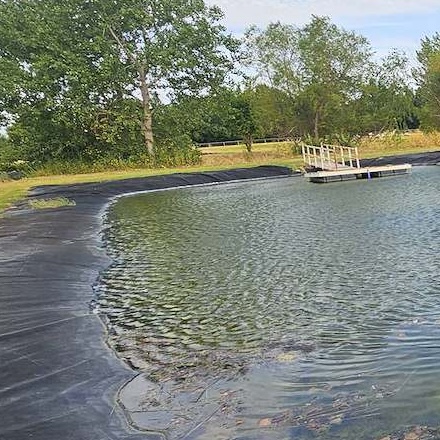
Reintroducing wetlands in a contaminated environment is one of the most well-known methods of natural infrastructure-based restoration, particularly when approaching remediation from a Superfund lens. This type of restoration typically uses “hybrid practices,” weaving together manmade support with natural elements to rebuild a site. This allows for ecosystems to rebuild and ultimately revitalize independently of human interference. |

- Overview
- Center for Restoration of Ecosystems and Watersheds (CREW)
- Tribal Case Study: Milltown State Park
- Resources
Wetlands are a unique biome in that they are incredibly fragile and susceptible to contamination, yet they exhibit a powerful capacity for resilience if given the tools to succeed. The aim of wetland-based remediation is to utilize the filtration capabilities of plants native to the ecosystem and natural sediments in a controlled system to assist in the cleanup of affected water and land without further spreading the contamination. For this process to work effectively, there must be an element of manmade support to hold back contaminated sediment from traveling to unwanted areas, but not enough human influence to hinder the ecosystem’s ability to regenerate on its own.
The remediation work at Tar Creek Superfund Site in Ottawa County, Oklahoma, centers on the importance of wetlands and their role in cleanup on a large scale. Considered irreversibly damaged by many, the Tar Creek site has become an especially complex picture in the Superfund world; however, the affected Tribes and surrounding communities have not given up on restoring this land. Dr. Bob Nairn, director of the Center for Restoration of Ecosystems and Watersheds (CREW) at the University of Oklahoma, has taken an ecological engineering approach to the Tar Creek site and works with his team to filter contaminants from impacted water sources through the construction of wetland filtration systems. Dr. Nairn presented to the Tribal Superfund Working Group in October 2025 about the remediation work he is involved in, offering a valuable source of information to reference when considering the role of wetlands in remediation.

Building Research Relationships During Superfund Remediation, Robert W. Nairn, PhD
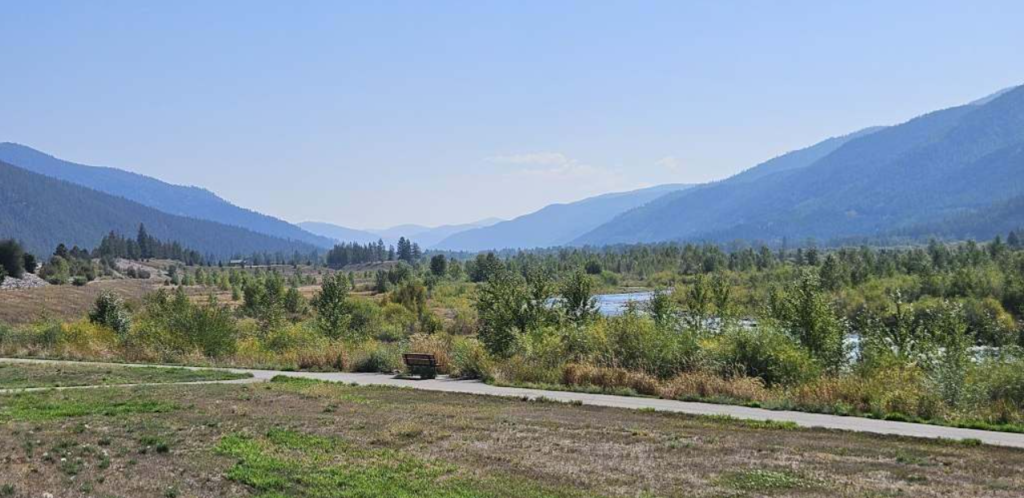

One of Montana’s first Superfund sites, Milltown Dam, highlights a natural infrastructure solution to a major environmental issue that impacted Tribal communities and surrounding ecosystems for over 100 years. The dam was located at the confluence of the Blackfoot and Clark Fork rivers, a place that holds significance for the Salish, Kalispel, Nez Perce, Kootenai, and Spokane people, among others, as an ancestral homeland and historic fishing site of bull trout.
The Milltown Dam blocked the confluence of the two rivers near Missoula, Montana, from 1908 until the completion of the remediation project in 2012. The dam was severely contaminated by tailings from upstream mines in Butte, Montana, resulting in 120 miles of river laden with arsenic and heavy metals. The sediments contaminated drinking water used by Milltown residents and poisoned surrounding ecosystems for decades before being designated a Superfund site. A collaboration between the State of Montana, Confederated Tribes of Salish and Kootenai, US DOJ and EPA successfully reached a settlement of $100 million with the involved mining companies for the removal and cleanup of the dam in 2005.
More information on the Milltown Dam Settlement
“The primary project goal [was] to reclaim the Milltown aquifer by removing the contaminated sediments and reservoir above them. To do that, the plan called for removing the dam, excavating and shipping the worst of the sediments to an existing repository at the Anaconda Superfund Site, and then creating a new river channel and floodplain for the Clark Fork River.”
Today, this site has been restored to a natural river habitat featuring diverse wetlands and native vegetation, and is one of the only Superfund sites in the country that has been converted into a State Park. The process of restoring a river is anything but simple; to meet this challenge, the project used natural infrastructure to provide the river and surrounding ecosystems with the tools to repair themselves and reestablish a natural flow, rather than building a man-made solution.
The river renewal strategy was multi-pronged, including the reintroduction of native riparian species and understanding how the floodplain would evolve over time, constructing riverbanks with natural materials (logs and riprap) to mimic the work of beavers. Weed mats were used to suppress invasive species and allow for native willow, cottonwood, and bullrush seedlings to take root, species that would help to filter out remaining contaminants, solidify the constructed riverbanks, and enable riparian ecosystems to grow. In this way, the restoration approach not only achieved short-term goals, but also ensures a healthier, more natural evolution for the ecosystem.
|
EPA Five Star Wetland and Urban Waters Restoration Grants Grant funding opportunities for communities and organizations to provide environmental education or training via projects that restore streams and wetlands.
EPA Wetland Program Development Grants Grant opportunities under the Clean Water Act (1990) to support governments in protecting, managing, and restoring wetlands.
EPA Tribal Nonpoint Source Program Grant and technical assistance opportunities for tribal governments to assess and mitigate NPS pollution.
EPA Citizen’s Guide to Phytoremediation High-level summary of Phytoremediation as a tool to clean up contaminated environments, including efficacy and safety concerns.
NRCS Watershed Protection and Flood Prevention Operations Program The Watershed Protection and Flood Prevention Operations (WFPO) Program helps federal, state, local and federally recognized tribal governments protect and restore watersheds. |
NRCS Wetland Mitigation Banking Program The Wetland Mitigation Banking Program (WMBP) is a competitive grants program that supports the development and establishment of wetland mitigation banks to make credits available for agricultural producers.
NWF Wetland Program Development Grants The Wetland Program Development Grants program assists state, tribal, and local governments and interstate/intertribal entities in developing or updating wetland programs.
A Dam Good Job: Beavers as Ecosystem Engineers This article describes the crucial role Beavers play in maintaining ecosystems through repairing degraded streams, maintaining wetlands, and increasing ecosystem function.
Network for Natural Infrastructure Knowledge Series September 2026 Knowledge Series, EWN Practice Guide for Floodplain Benching Projects, which includes a brief description and recorded session. |
Plants and Seeds for Resilience
|
|
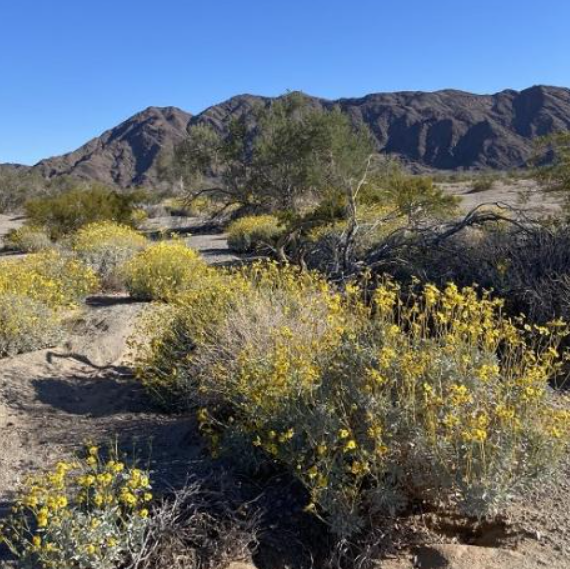
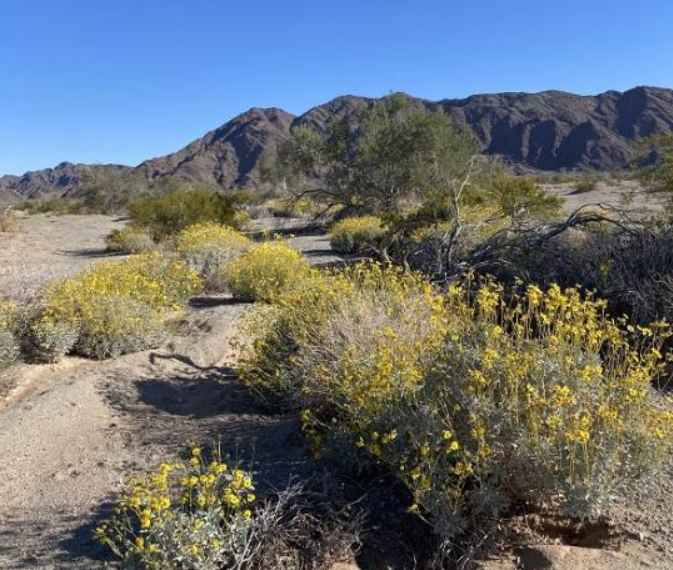
Plants, seeds, and soil health are foundations of healthy ecosystems, and often act as indicators for contaminants in a system. Because of their impact on ecosystems and human experience, plants can play a very helpful role in environmental remediation of all kinds, including Superfund. Revegetation is often a key element to the revival of a contaminated site, although it can be difficult to find the resources for native seed rehabilitation on a large scale. See our ‘Regional Seed Banks and Tribal Revegetation Projects’ section below to find potential resources in your area. |



- Overview
- Regional Seeds Banks/Conservancies for Revegetation Projects
- Tribal Case Study: Jackpile Mine
- Tribal Case Study: Klamath River Dam Removal
- Resources
- Technological Tools for Revegetation Projects
Phytoremediation is a form of natural infrastructure that uses plants to remove contaminants and hold pollutants within the soil, thus stabilizing the environmental effects. This can be used as a long-term, lower-cost treatment for damaged ecosystems, alongside the removal and containment of hazardous waste.
Learn more about phytoremediation
The major focus of phytoremediation is to reduce the impact of pollutants on human populations. This can be done via extraction, meaning a plant will absorb heavy metals into their leaves and roots, and can then be disposed of as toxic waste, and through stabilization, which is, in essence, using a ‘cover crop’ to keep contaminants in sediment from spreading due to erosion. Both strategies can be implemented using native plants, which help a habitat to return to its natural state over time, maintain the heritage of the land, and promote biodiversity in the area.
It is important to note that phytoremediation is not a sole solution to a complex environmental problem. However, this is a developing field in which multiple Superfund Research Centers are studying and working with Tribes to rehabilitate land and communities in tandem via native plant remediation.
The Superfund Research Centers working with Tribes and native plant-based remediation include:
University of New Mexico Metal Exposures on Tribal Lands in the Arid Southwest (METALS)
University of Arizona ‘DUST’ Superfund Research Center
Connecticut Agricultural Experiment Station (CAES)
_____________
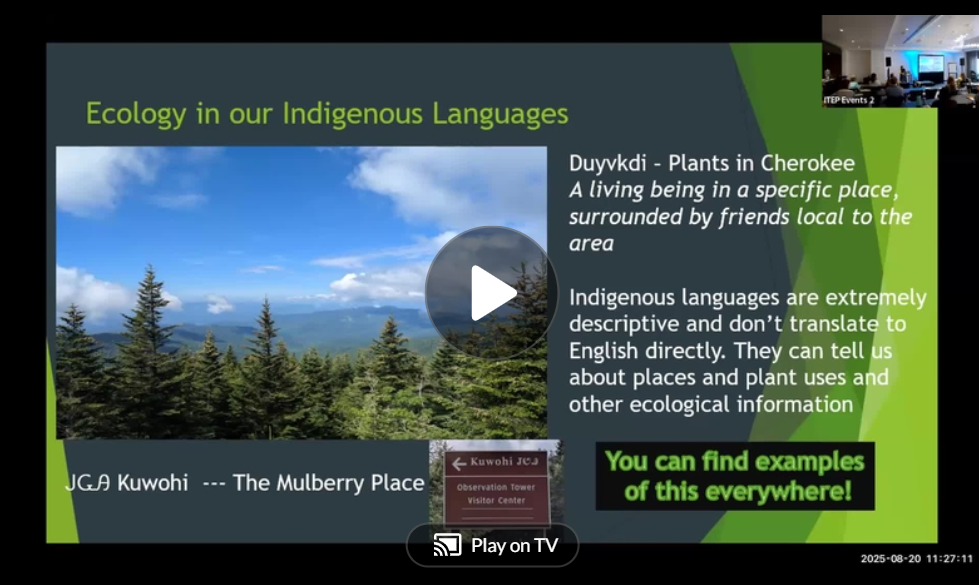
Multiple sessions in past years’ Tribal Lands and Environment Forum conferences have focused on nature-based solutions related to plants. These recordings are available to learn more about how plants relate to restoration from a Tribal lens.
|
Nature-Based Solutions 101: Nature’s First Tools and First Peoples – A Perfect Fit Cuauhtemoc Landeros, Tribal TAB – session begins at 25:10
|
A Discussion with Tribal Plant and Seed Growers and Restoration Projects A panel discussion with Dennis Longknife, Fort Belknap Indian Community, Katie Smith-Easter, Southeastern Grasslands Institute, and Gloria Tom, National Wildlife Federation |


|
Nation-wide USFS State and Tribal Nurseries
California
Columbia River Watershed Salmon Valley Native Plants Restoration
Great Basin |
Midwest Kansas Alliance for Tribal Community Health Tribal Alliance for Pollinators (TAP) Seed Bank
Northeast
Southeast North Carolina Botanical Garden The Southeastern Grasslands Institute Native Plant Materials Program
Southwest Borderlands Restoration Network
Ontario |
Know of a Tribal seed resource that’s not listed? Please reach out to us so we can add it to our page!
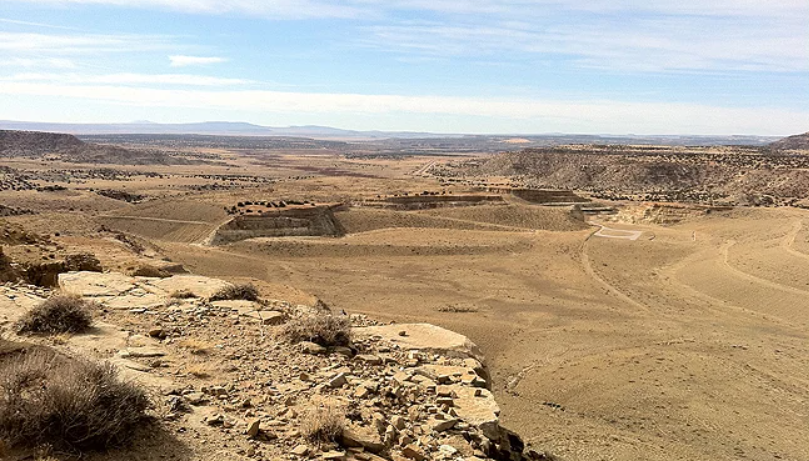



Jackpile Mine, one of the largest and most environmentally devastating open pit uranium mines in the country, still impacts communities in Laguna Pueblo nearly 50 years after its closure. Upon the closing of the mine, open pits and waste piles were left uncovered, allowing contamination to spread to the soil, water, and even air, polluting the town of Paguate and surrounding areas and endangering the health of generations of Laguna people. EPA designated Jackpile Mine as a Superfund Site in 2013 and has since been working on remediation strategies to contain and clean up the mine waste.
Learn more about legacy waste at Jackpile Mine
The efforts to remediate Jackpile Mine have a long way to go, but the Superfund site has also become a place of development for research using native plants to help in the remediation process. The UNM METALS Superfund Research Center and Southwest Research and Information Center (SRIC) are working with Laguna Pueblo to study the natural capacity of plants, fungi, and soils to filter heavy metals and help to clean up or sequester contamination. These methods of phytoremediation may be a tool in helping Tribal communities reduce further exposure to contaminants using natural infrastructure solutions that benefit the earth simultaneously. The health of the community and ecosystem are equally impacted by this waste, and utilizing native plants to begin to heal this trauma not only allows for reconnection between people and place but holds promise for the future of the phytoremediation field.
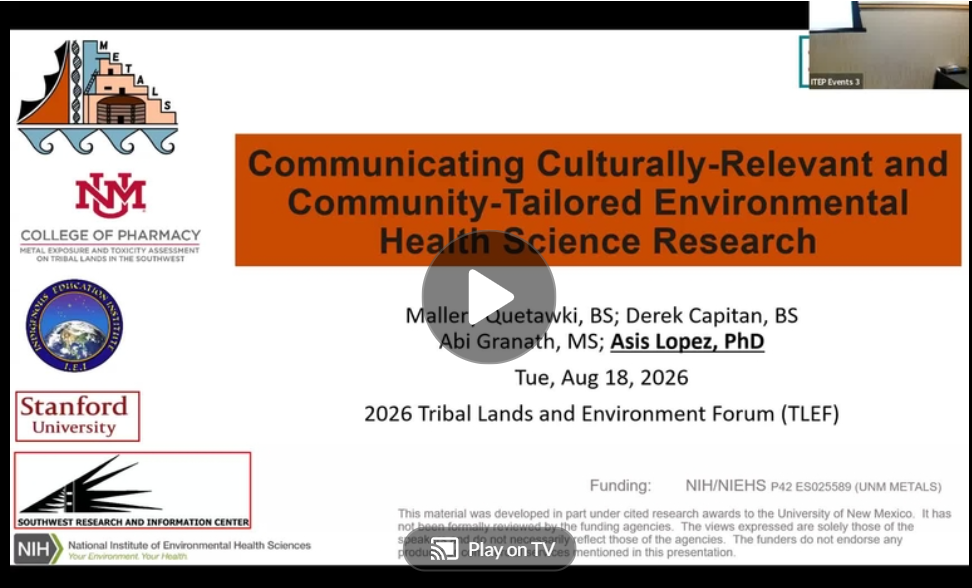
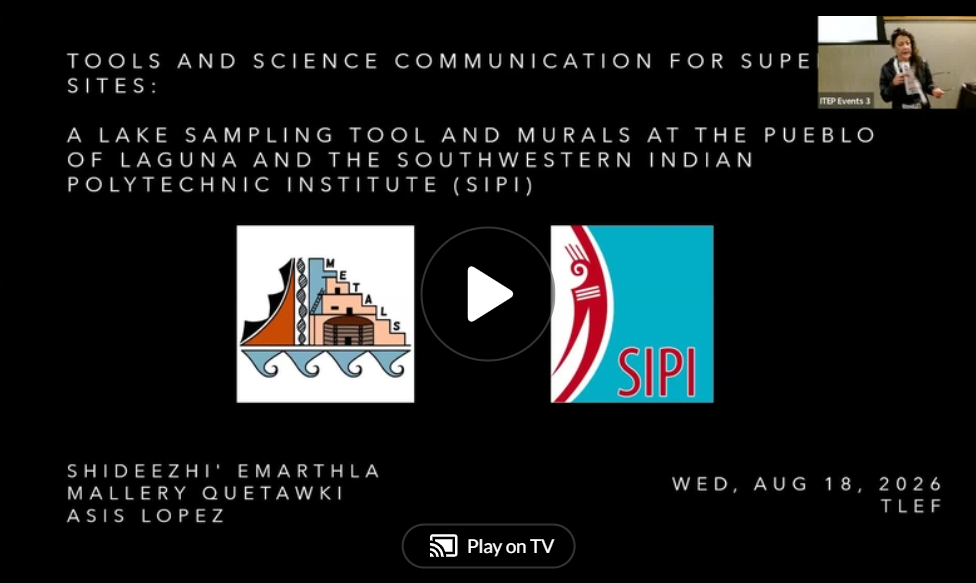
The presenters from UNM METALS and SRIC attended the 2026 Tribal Lands and Environment Forum. Watch their sessions on phytoremediation and community health below!
|
Communicating Culturally-Relevant and Community-Tailored Environmental Health Science Research |
|


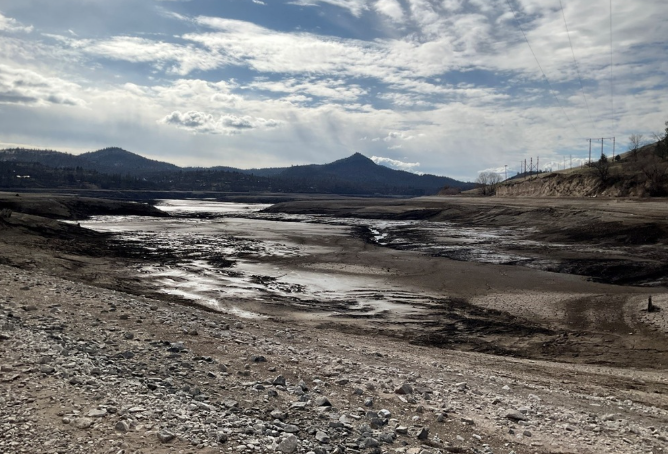
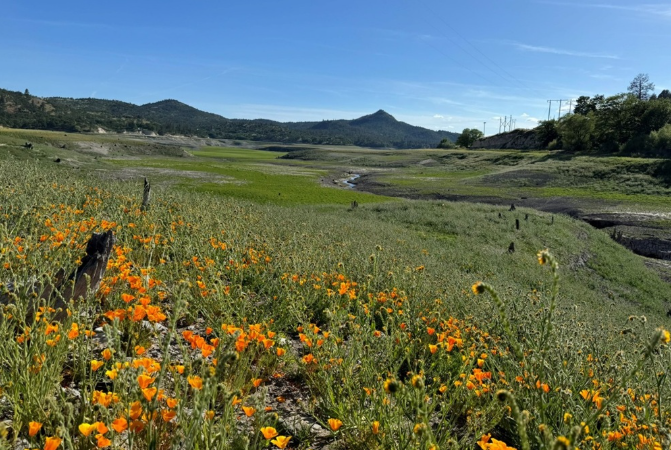




The Klamath River Basin has been a vital place for the Yurok, Hoopa, Karuk, Shasta, Klamath, and Modoc Tribes for millennia and is a recent example of a successful Tribally led restoration project on a large scale. Four hydroelectric dams blocking the Klamath River were removed in 2023-24, resulting in the largest dam removal project in the country. The salmon that are so intrinsic to life for Tribes in the Basin are returning to their historic waterways, and the return of the river illustrates a return of Tribal sovereignty and the continued ability to steward the land and waters.
More information on the dams and removal process
More information regarding ecosystem health post dam removal
This remediation project not only addressed the watershed downstream of the dams, but also faced a massive revegetation process with the 2,200 acres of land which had been underwater since the construction of the dams beginning in 1918. Reseeding this land became a collaborative effort between the Yurok Tribal Fisheries Program, Resource Environmental Solutions (RES), and Heritage Growers – a nonprofit venture of River Partners. It can be incredibly difficult to source the quantity of native seeds needed to revegetate an area with diverse fauna, which is critical to rebuilding healthy ecosystems. Native and culturally important species are often not suited for large scale projects due to availability of seed, and cultivating seed in artificial conditions can lead to the loss of traits which make them beneficial to the land in the first place.
Heritage Growers is working to combat this issue with their ‘seed amplification’ program. They contract with remediation operations and take native seeds from a local area and grow plants in large amounts, then collect the seeds and return them as diverse mixture for revegetation use. For the Klamath River Project, they contributed 40,000 plants and 1,200 pounds of locally adapted seed to help the floodplains regenerate. The diverse mixture of seed, along with the hard work of the Yurok Tribe and partners, created resilience in the recovering ecosystem and accomplished native plant revegetation on a massive scale.
BIA BFWR Invasive Species Program
Competitive funding to federally recognized Tribes and Tribal Organizations’ projects to address the negative impacts of invasive species on their lands.
EPA Citizen’s Guide to Phytoremediation
High-level summary of Phytoremediation as a tool to clean up contaminated environments, including efficacy and safety concerns.
National Native Seed Conference
2027 National Native Seed Conference; Seeds for Change: Building Resilient Native Seed Infrastructure registration and information website.
Helps growers to navigate genetic diversity in native seeds and know what may grow better where, based on climate zones.
Climate Smart Restoration Tool
Shows data from present and past to illustrate how climates have changed and help restoration projects understand what they are working with.
Decision support tool for ecological restoration efforts in California. It matches potentially suitable seed collection and planting sites by analyzing spatial data on climate change, soil characteristics, species distributions, and adaptive neighborhoods.
Ecoregional Revegetation Application (ERA)
Map-based tool used to identify and select optimal native plant species and seed mixes for specific project sites.
Urban Re-Integration
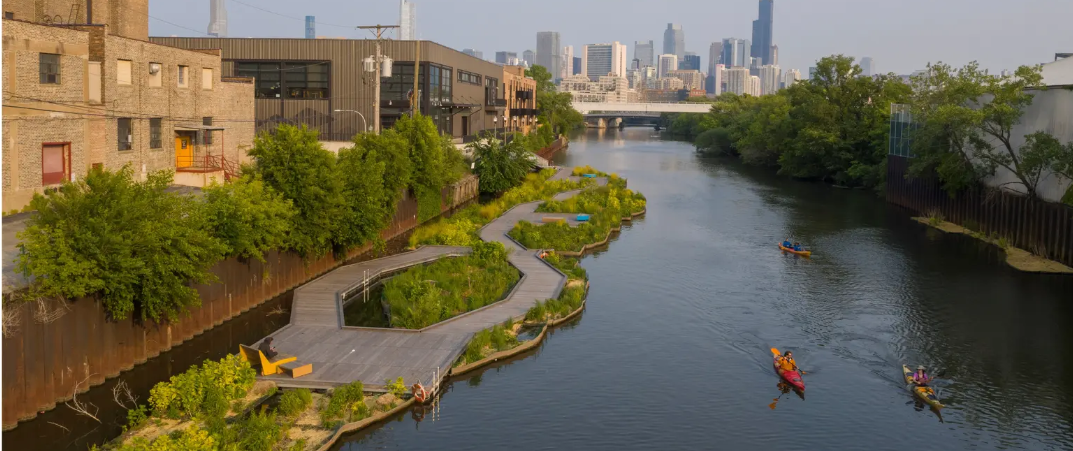  |
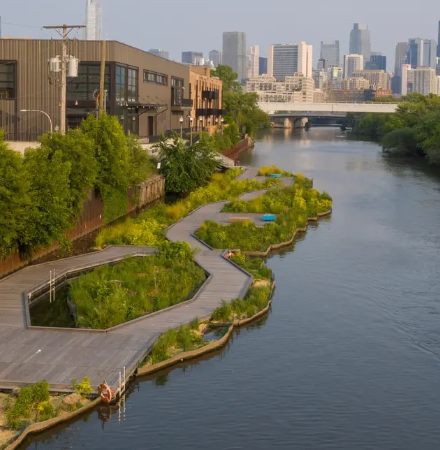
Remediation in urban spaces often focuses on the impact upon humans, rather than human impact on the environment. Integrating green spaces and ecological health into redevelopment projects is key not only to provide a higher quality of health for current and future generations, but to reinvigorate the connection between cities and the earth. |


Oftentimes, urban contamination sites are classified as brownfields; however, involving green infrastructure in remediation can be applicable to all sorts of solid waste response. In addition to benefitting community health, the inclusion of natural spaces in urban redevelopment increases resilience and disaster preparedness – i.e. the urban heat island effect, stormwater runoff management, and air quality improvements.
To learn more about green infrastructure in urban contexts and pertaining to brownfields, check out:
EPA’s Reclaiming Lost Lands: Revitalizing Brownfields with Green Infrastructure
ITEP’s Brownfields: Land Restoration Using Traditional Foods, Plants, and Culture online course.
Enroll in this self-paced course under the Tribal Waste & Response section of ITEP’s course catalog.
For more information on Brownfields identification and grant assistance, visit our colleagues at the Tribal Technical Assistance to Brownfields (Tribal TAB) Program.
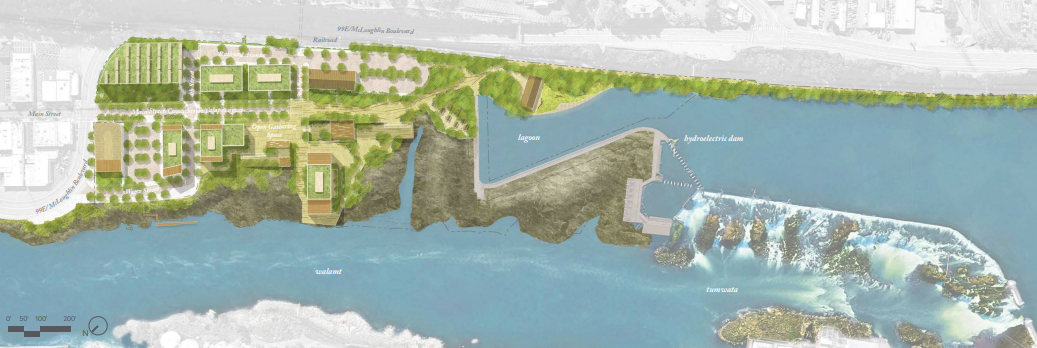



The tumwata village project exemplifies a promising story in the interaction between urban and natural spaces in the remediation of the Blue Heron brownfield site at Willamette Falls. The Confederated Tribes of Grand Ronde successfully purchased the former industrial site, which has been a culturally significant place for the Tribe since time immemorial, in 2019 and have broken ground on their redevelopment project as of May 2026.
The 23-acre site is contaminated from decades of heavy industrial use, and water pathways were diverted to capitalize on power use from the river and falls. The Tribe plans not only to help the landscape return to a healthy ecosystem, but to incorporate community needs and human wellbeing in the process.
The project works with the idea of Healing, both in the revival of stewardship for the Tribe and in the land itself. Focusing on river’s edge restoration, the Confederated Tribes of Grand Ronde plan to create a mixed-use area resulting in both public and tribal member-specific river access, economic opportunity in the form of commercial and educational spaces, and ecological reformation of the formerly industrial site. The major remediation effort will be concentrated on restoring channels that enable historic water pathways (increasing valuable salmon habitat) and designing the human areas around the prosperity of these channels.
The Confederated Grand Ronde plans and further information on the natural infrastructure project
EPA Reclaiming Lost Lands: Revitalizing Brownfields with Green Infrastructure
Recorded 2018 session hosted on EPA site titled, “Reclaiming Lost Lands: Revitalizing Brownfields with Green Infrastructure”.
EPA Five Star Wetland and Urban Waters Restoration Grants
Grant funding opportunities for communities and organizations to provide environmental education or training via projects that restore streams and wetlands.
NWF Natural Infrastructure Center for Environmental Justice and Resilience (NICER)
The National Wildlife Federation’s centralized site that supports the advancement of natural infrastructure projects that benefit environmental justice communities and wildlife. The site hosts resources and education, facilitates communal collaboration, and connects a network of practitioners, community leaders, and allies to further natural infrastructure solutions.
NWF Superfund Redevelopment Program
The National Wildlife Federation’s Superfund Redevelopment Program provides technical assistance to communities interested in restoring and reusing formerly contaminated land.
Coastal and Marine Protection
|
|
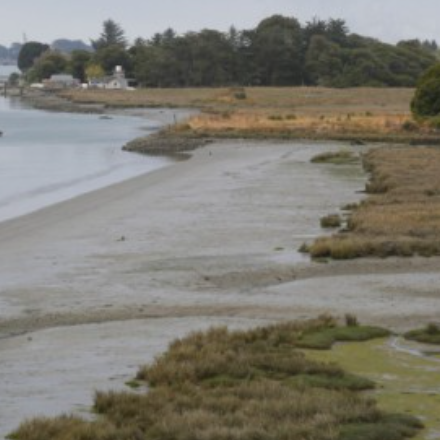
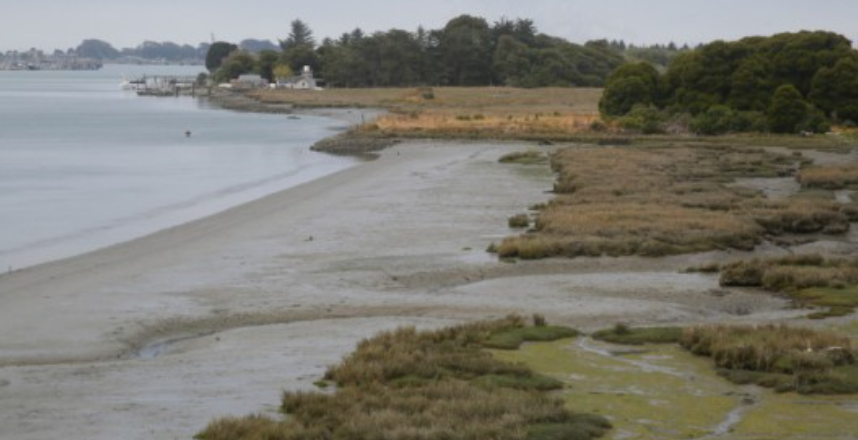
Implementing natural infrastructure in coastal resilience planning and marine restoration is growing in popularity as a lower-cost, adaptable solution. This strategy of infrastructure, also referred to as “living shorelines,” can protect against flooding and erosion, as well as fortifying marine habitats, protecting against storms, and ultimately building resilience for coastal communities. More information from EPA on natural infrastructure in coastal regions |


- Overview
- Tribal Case Study: Tuluwat Island
- Tribal Case Study: Pointe-au-Chien Oyster Restoration Project
- Resources
Indigenous communities in coastal regions are facing the loss of traditional foodways and historic places due to rising sea levels, marine contamination, and coastal erosion. Built marine environments, often hybrid strategies sometimes known as ‘gray infrastructure,’ have helped to replenish marine ecosystems by reducing wave impacts, providing habitats for coastal creatures and vegetation, and revitalizing historic fishing areas. These strategies include built sand dunes, reefs, and marine wetlands to protect vulnerable ecosystems.
Nature-based infrastructure/Living shorelines informational video

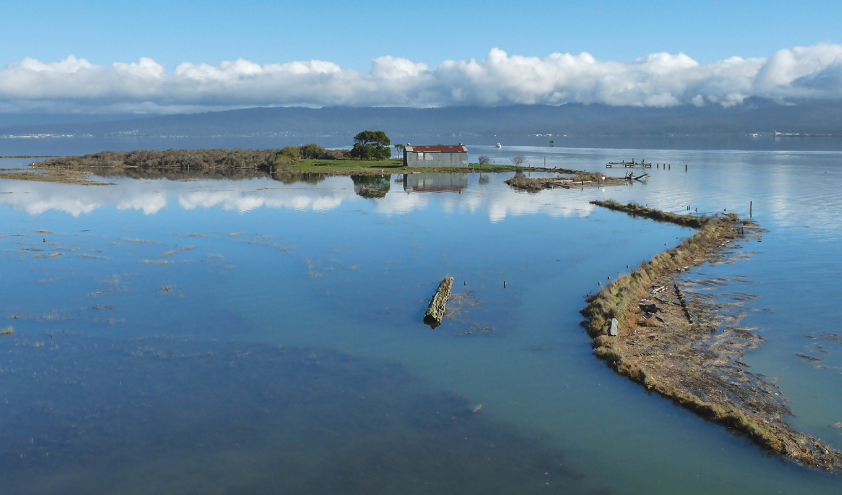


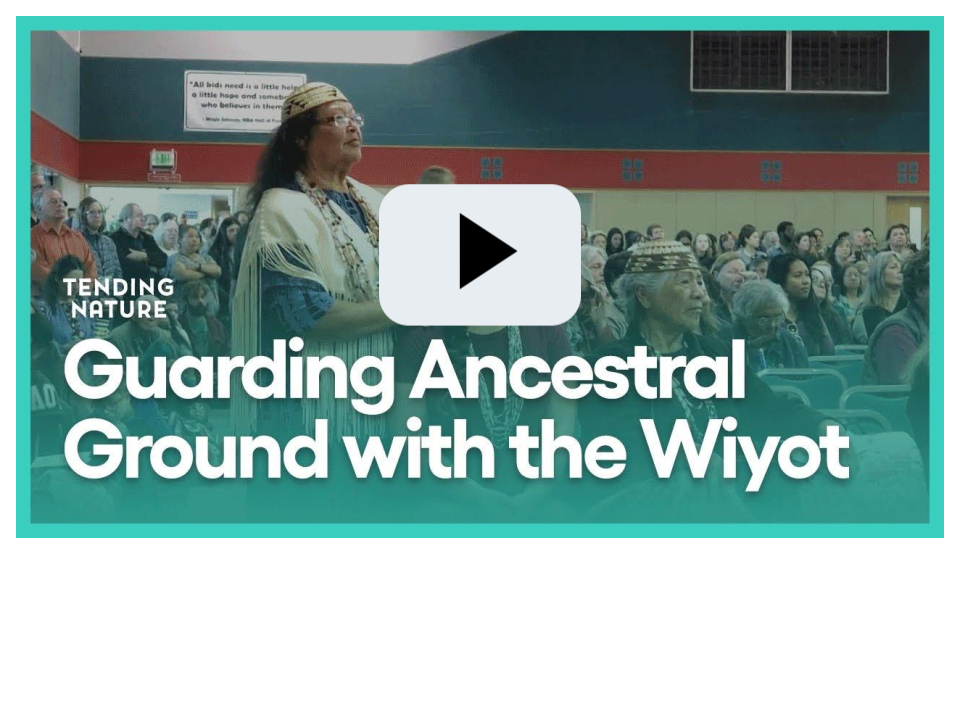
The island of Tuluwat is considered the center of the universe for the Wiyot people. Located in Humboldt Bay, California, this island has undergone over a century of occupation, during which the Wiyot tribe faced considerable trauma, including a devastating massacre on the island itself. Subsequently, the land was polluted with toxins from industrial use and a sea wall constructed from old boat batteries. The long struggle to reclaim this land culminated in 2015, with the City of Eureka, California returning the remaining acres of the island to the Tribe, eventually resulting in full Tribal ownership of Tuluwat Island.
Learn more about the Land Back process on Tuluwat Island
Learn more about the history of Tuluwat Island
After finally securing ownership of the island, the Wiyot Tribe was left to clean up decades of pollution from the occupation of settlers and lack of industry accountability of the site. Industrial waste remained on the site and contaminated the soil; invasive plants had taken over the landscape, and decrepit structures and debris stood abandoned. With these impacts, in addition to the sea wall made up of toxic boat batteries leaking into the bay, the island faced extreme environmental degradation. Most of the work in removing debris and invasive plants was done by Tribal members and community volunteers, though the Tribe did receive assistance from the NOAA Marine Debris Removal Program, which offers grants for coastal cleanup projects.
Natural infrastructure strategies were utilized in the remediation of this land in a variety of ways. The first was removing invasive plant species to create a livable environment for native species and the return of first foods, including elderberry and salmonberry. This, in turn, aided the health of the bay, surrounding oyster farms, and commercial fishing operations. The Tribe also removed the sea wall built with batteries, excavated the severely contaminated soil, and replaced the barrier with erosion control in the form of a vegetated cap, with the help of EPA brownfield grant assistance. The vegetated cap has a foundation of composite sheet piling backfilled with earth and covered with geotextile matting. This foundation was then topped with soil and woody debris to build up the shoreline and allow for vegetation at a higher elevation from the tideline. This strategy provides refuge for coastal birds and animals, along with protecting the centuries old shell midden uncovered during the restoration process. Utilizing this nature-based solution helped to revitalize the ecosystems relying on this island for survival and increase the resilience of this sacred land.
Learn more about the revitalization project on Tuluwat Island
The Tuluwat Island restoration project is not yet complete, but major milestones have already been reached, including the return of Tribal sovereignty and ecological restoration. The Wiyot Tribe is currently in the process of constructing a Cultural Center on the island that celebrates the Tribe’s return home and honors the history of the island and the people who have always acted as stewards of the land.

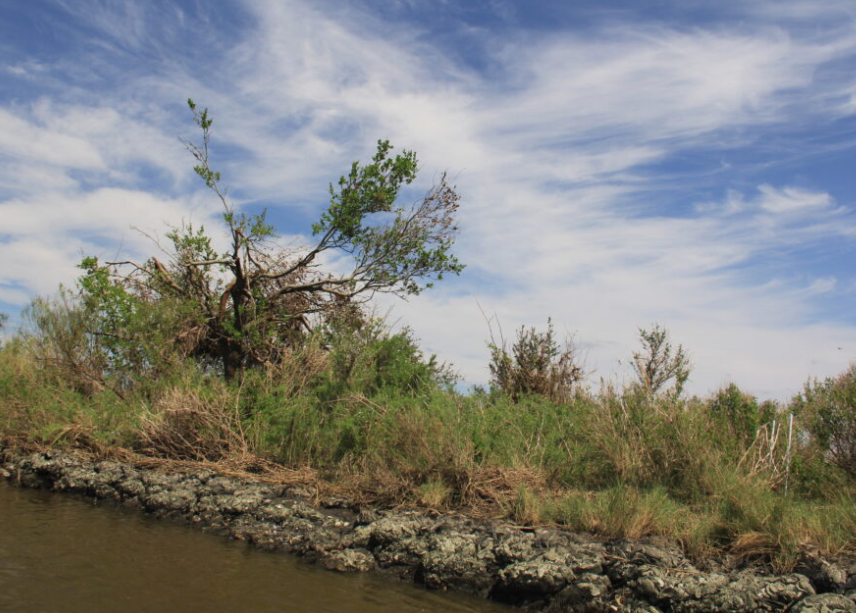



On the Louisiana Gulf Coast, Pointe-au-Chien Indian Tribe collaborated with US FWS and the Coalition to Protect Coastal Luisiana (a local nonprofit) on a natural infrastructure project in response to loss of cultural sites due to coastal erosion.
Built by ancestors, mounds that were historically used for ceremonies, burial sites, and homes along the coast were being washed away, and protecting the surviving mounds was a significant cultural goal for the Pointe-au-Chien Tribe. By constructing an artificial reef, the Tribe (along with a volunteer force) was able to create a bank which holds back the land from eroding and protects the mounds, as well as providing marine habitat which allows for fishing in the area.
Learn more about the efforts to save the shell mounds
The reef was made from recycled oyster shells, gathered from restaurants in New Orleans and surrounding areas, and built by volunteers and tribal members. Not only is this a creative way to recycle restaurant waste, but the reef created became a ‘living shoreline’ in which live oysters made homes in the shell reef and other marine species returned as wave impacts were decreased.
A smaller oyster reef, built in 2019, has succeeded in reducing the degradation of a mound and helping the area survive the impacts of Hurricane Ida. While these reefs are not a comprehensive solution, this is a start to combating cultural site losses in the face of climate change and employing creative systems to do so.
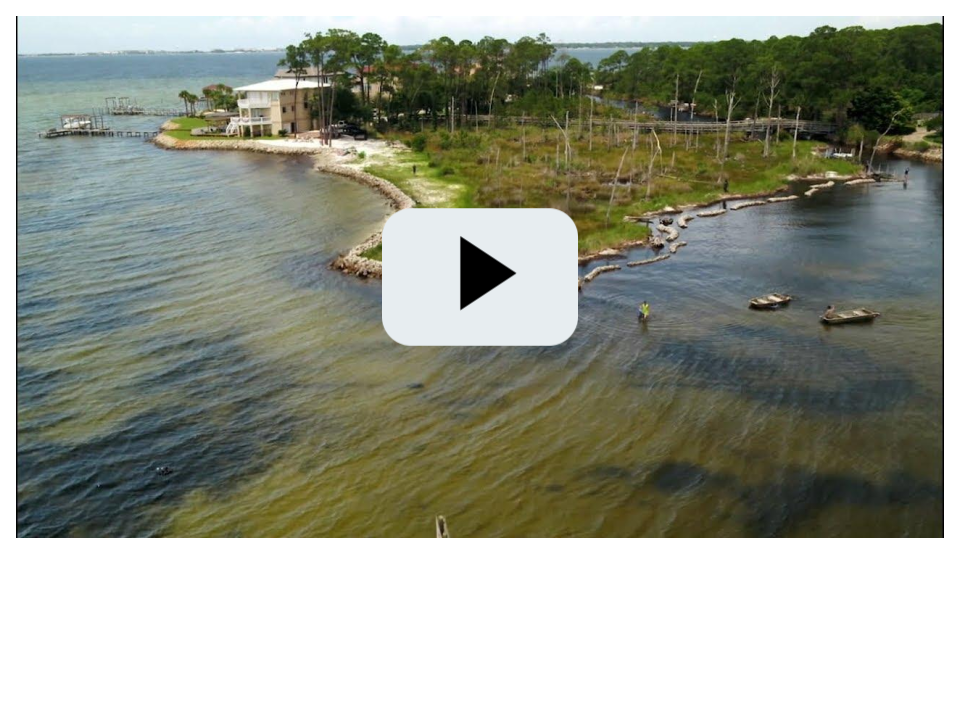
This PBS story highlights a similar project and explains the efficacy of a ‘living shoreline’:

|
FEMA Pre-Disaster Mitigation Grant Program The Pre-Disaster Mitigation grant program makes federal funds available to state, local, tribal and territorial governments to plan for and implement sustainable, cost-effective measures designed to reduce the risk to individuals and property from future natural disasters.
NOAA Coastal Habitat Restoration and Resilience Grants for Tribes and Underserved Communities Funded by the Bipartisan Infrastructure Law, $20 million in funding is available for projects that will advance the coastal habitat restoration and climate resilience priorities of tribes and underserved communities.
NOAA Natural Infrastructure Fact Sheet NOAA Fact Sheet highlighting how nature provides effective solutions for minimizing coastal flooding, erosion, and runoff, including a summary of nature-based solutions, or Natural Infrastructure.
NOAA Marine Debris Removal Program Competitive funding opportunities for marine debris projects and a link to NOAA’s Clean Oceans Innovation Hub. |
Alaska State Community Resilience Resources Webpage that hosts many resources about community resilience, including emergency planning, community-based methods for monitoring erosion, flooding, and permafrost thaw, resilience and mitigation planning, and incremental, community-driven relocation.
Fact sheet on Natural Infrastructure as it applies to coastal regions, as well as a local funding opportunity.
Network for Natural Infrastructure Knowledge Series September 2026 Knowledge Series, EWN Practice Guide for Floodplain Benching Projects, which includes a brief description and recorded session.
Washington State Department of Ecology: Building Coastal Climate Change Resilience Article describing Washington State’s Department of Ecology’s approach to several disasters resulting from coastal climate change, including exploring how ecology is part of their innovative approach to helping local communities. |
General Grants and Resources
BIA
BIA BFWR Invasive Species Program
Competitive funding to federally recognized Tribes and Tribal Organizations’ projects to address the negative impacts of invasive species on their lands.
EPA
EPA Citizen’s Guide to Phytoremediation
High-level summary of Phytoremediation as a tool to clean up contaminated environments, including efficacy and safety concerns.
EPA Environmental Benefits of Superfund Site Redevelopment
EPA site with a variety of resources highlighting the importance of revitalizing Superfund sites via various methods, including ecological revitalization, flood mitigation, and built environment.
EPA Five Star Wetland and Urban Waters Restoration Grants
Grant funding opportunities for communities and organizations to provide environmental education or training via projects that restore streams and wetlands.
Information about EPA’s five Technical Support Centers (TSCs), which offer scientific and engineering expertise to contaminated site decision makers within EPA, including remedial project managers and on-scene coordinators.
EPA Tribal Environmental Plans Fact Sheet
Fact sheet describing EPA-Tribal Environmental Plans, or ETEPS, which are joint plans outlining how each Tribe and EPA intend to work together to address shared environmental priorities.
EPA Tribal Nonpoint Source Program
Grant and technical assistance opportunities for tribal governments to assess and mitigate NPS pollution.
EPA Wetland Program Development Grants
Grant opportunities under the Clean Water Act (1990) to support governments in protecting, managing, and restoring wetlands.
FEMA
FEMA Pre-Disaster Mitigation Grant Program
The Pre-Disaster Mitigation grant program makes federal funds available to state, local, tribal and territorial governments to plan for and implement sustainable, cost-effective measures designed to reduce the risk to individuals and property from future natural disasters.
FEMA Building Resilient Infrastructure and Communities (BRIC)
Grant program that provides federal funding to states, U.S. territories, federally recognized Tribal Nations, and local governments for pre-disaster hazard mitigation activities that strengthen infrastructure, reduce risks from natural hazards, and build long-term resilience.
National Wildlife Foundation
NWF Natural Infrastructure Center for Environmental Justice and Resilience (NICER)
The National Wildlife Federation’s centralized site that supports the advancement of natural infrastructure projects that benefit environmental justice communities and wildlife. The site hosts resources and education, facilitates communal collaboration, and connects a network of practitioners, community leaders, and allies to further natural infrastructure solutions.
NWF Nature-Based Solutions Funding Database
The National Wildlife Federation’s interactive database for communities interested in pursuing federal funding or technical assistance for nature-based solutions.
NWF Superfund Redevelopment Program
The National Wildlife Federation’s Superfund Redevelopment Program provides technical assistance to communities interested in restoring and reusing formerly contaminated land.
The National Wildlife Federation’s Tribal Wildlife Grants (TWG) Program supports the development and implementation of programs for the benefit of wildlife and their habitats and species of Tribal cultural or traditional importance, including species that are not hunted or fished.
NWF Wetland Program Development Grants
The Wetland Program Development Grants program assists state, tribal, and local governments and interstate/intertribal entities in developing or updating wetland programs.
NOAA
NOAA Coastal Habitat Restoration and Resilience Grants for Tribes and Underserved Communities
Funded by the Bipartisan Infrastructure Law, $20 million in funding is available for projects that will advance the coastal habitat restoration and climate resilience priorities of tribes and underserved communities.
NOAA Marine Debris Removal Program
Competitive funding opportunities for marine debris projects and a link to NOAA’s Clean Oceans Innovation Hub.
NOAA Natural Infrastructure Fact Sheet
NOAA Fact Sheet highlighting how nature provides effective solutions for minimizing coastal flooding, erosion, and runoff, including a summary of nature-based solutions, or Natural Infrastructure.
USDA
NRCS Watershed Protection and Flood Prevention Operations Program
The Watershed Protection and Flood Prevention Operations (WFPO) Program helps federal, state, local and federally recognized tribal governments protect and restore watersheds.
NRCS Wetland Mitigation Banking Program
The Wetland Mitigation Banking Program (WMBP) is a competitive grants program that supports the development and establishment of wetland mitigation banks to make credits available for agricultural producers.
USDA Water & Waste Disposal Predevelopment Planning Grants
Grant funding that helps eligible low-income communities plan and develop applications for proposed USDA Rural Development water or waste disposal projects.
Other Resources
California Natural Resources Agency: Tribal Nature-Based Solutions Program
Statewide resource in California providing technical assistance and competitive funding to tribes for state-specific nature-based solutions.
Nature-Based Solutions Resource Guide
The federal government’s 2022 Nature-Based Solutions Resource Guide, which includes federal examples, guidance, resource documents, tools, and techical assistance information.
Southwest Climate Adaptation Science Center: Tribal Events and Funding
The SCASC’s Events Calendar and ongoing funding opportunities list
For more information please contact:
Todd Barnell, Program Manager
Todd.Barnell@nau.edu